High security · Newmarket
Safe Opening & Combination Change in Newmarket
The bookkeeper who set the office safe's code retired in a hurry, and the float cash for tomorrow's registers is sitting behind a keypad nobody else in the building can operate.
In plain words
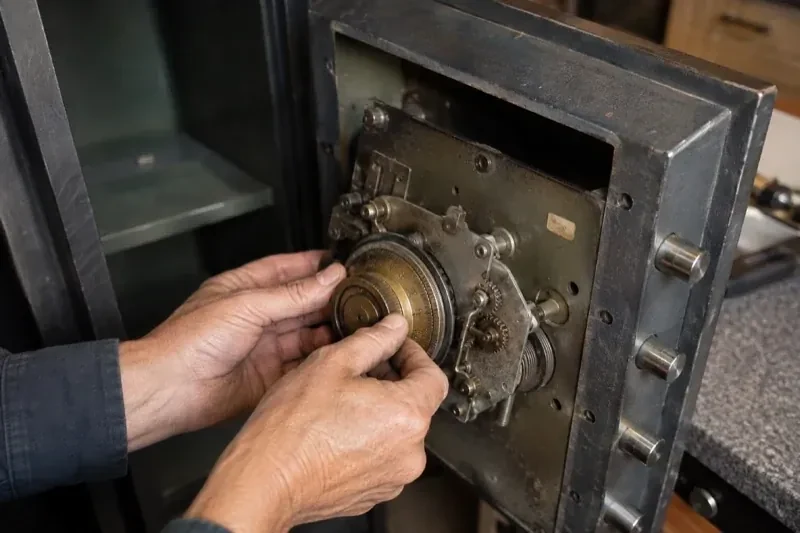
Once a safe is open, the visit is only half finished. The lock is inspected for wear, corrosion or damage that caused the original problem, repaired or replaced if it is no longer reliable, and then set to a new combination chosen on the spot. That combination is cycled several times with the door both open and closed so everyone leaves confident it will work again on the next ordinary morning, not just once under supervision.
How the visit goesThe pharmacy's drop safe has a keypad that finally lost power for good, and the little override key that was supposed to live behind the counter cannot be found anywhere.
Safe Opening & Combination Change
How the visit goes
Looking for a relocker or prior damage
Some safes include a relocker, a small device built to jam the bolt work until a trained technician services it, if the case is drilled in the wrong place, dropped, or exposed to fire. The locksmith looks for pry marks, drill attempts, scorching or a history of the safe being moved or dropped, since any of these can explain a lock that suddenly refuses a combination that worked yesterday. Recognizing a tripped relocker early changes the plan: the fix is mechanical, freeing or replacing the relocking mechanism, rather than another attempt at the original combination or a straightforward reset.
Resetting an electronic keypad
Electronic safe lock recovery options vary by model: some support a manufacturer reset code entered through the keypad or an emergency key hidden behind a cover plate, while others need a small reset tool connected to a port on the back of the lock, which sits inside the secure container and still needs the door opened by other means first. The locksmith works through the specific model's own procedure where one exists, which for many models restores factory defaults or wipes stored codes rather than revealing the old one. Where the keypad itself has failed rather than merely losing power, the input unit is replaced and reconnected to the existing lock body before any new code is set.
A safe that opens the same way every time
The visit finishes with the door cycled several times under the new combination, both open and closed, so the result is proven rather than assumed. The handle is checked for smooth, even movement, and the bolt work is watched to confirm it retracts and extends fully on each attempt. Anything noticed along the way, a stiff dial, a keypad that needs a firmer press, or a hinge that could use attention, is pointed out plainly so nothing is left as a surprise. You are shown the working combination yourself before the locksmith leaves, rather than simply being told that it works.
Safe Opening & Combination Change
In the van
Replacement dial and ring
Combination change key
Manufacturer reset tool
Nine-volt and lithium batteries
Drill rig and carbide bits
Safe Opening & Combination Change
What affects the quote
Whether model or service records are available
A visible data plate, a purchase receipt or a manual on hand speeds up identifying the exact lock; a safe with none of that takes a few extra minutes to assess on site.
Contents that affect how carefully the opening proceeds
Cash, business records, prescription logs or firearms each carry their own handling expectations once the door opens, which can shape how the visit is planned and quoted.
Where the safe is located
A safe bolted to a floor, built into a wall, or set in a tight closet or basement corner takes more time to work around than one standing freely in an open room.
What to have ready
- Does the keypad light up or make sounds when pressed?
- Is the lock a dial, a keypad, or a key?
- Does the handle turn normally, or does it feel stuck?
Safe Opening & Combination Change: questions
QuestionsMy electronic safe lock has a dead battery. Do you still need to drill it?
Usually not. It depends on the model. Some electronic locks offer an external contact for a fresh battery, or a mechanical override key behind a cover plate; restoring power this way wakes a dead keypad but does not bypass a lost code on its own. Others have a reset port on the lock body, which sits inside the safe and still needs the door opened by other means first. The locksmith works through that model's own documented procedure before considering anything more invasive.
How is a new combination actually chosen and set?
You choose the numbers yourself, within whatever range and spacing that lock's rules allow, rather than being handed a default sequence. On a mechanical lock the locksmith uses a manufacturer change key to reset the wheel pack to your chosen combination; on an electronic lock the new code is entered directly through the keypad or a connected programming tool. Either way it is tested several times, door open and then closed, before the visit is considered complete.
Is a mechanical dial or an electronic keypad the better choice for a business safe?
Each suits a different way of working. A mechanical dial has no battery to fail and a long service life, but only ever holds one combination at a time. An electronic keypad allows separate codes for different staff and an audit trail on some models, at the cost of needing battery changes. Either can be fitted with a genuinely high security rating; the choice usually comes down to how many people need independent access.