Lockouts · Newmarket
Break-In Damage Lock Repair
The shop's aluminum door has a bent meeting stile and the hookbolt is jammed half out.
In plain words
A break-in repair happens alongside a police file and an insurance claim, and a good locksmith keeps both in mind. Before any hardware is moved the damage is photographed as found: door face, edge, strike, jamb, hinges and glass. The old parts are kept for the adjuster unless you prefer otherwise, and the written record at the end lists what was broken, what was replaced, what was reinforced and what is left for another trade. Insurers ask policyholders to document losses, keep damaged property and keep receipts, and this visit produces all three. You choose who does the repair; the locksmith makes it easy to show what it took.
How the visit goesThe shop's aluminum door has a bent meeting stile and the hookbolt is jammed half out. The alarm did its job and the display is untouched, but the entrance will not close properly and opening time is hours away.
Break-In Damage Lock Repair
How the visit goes
How the door was attacked
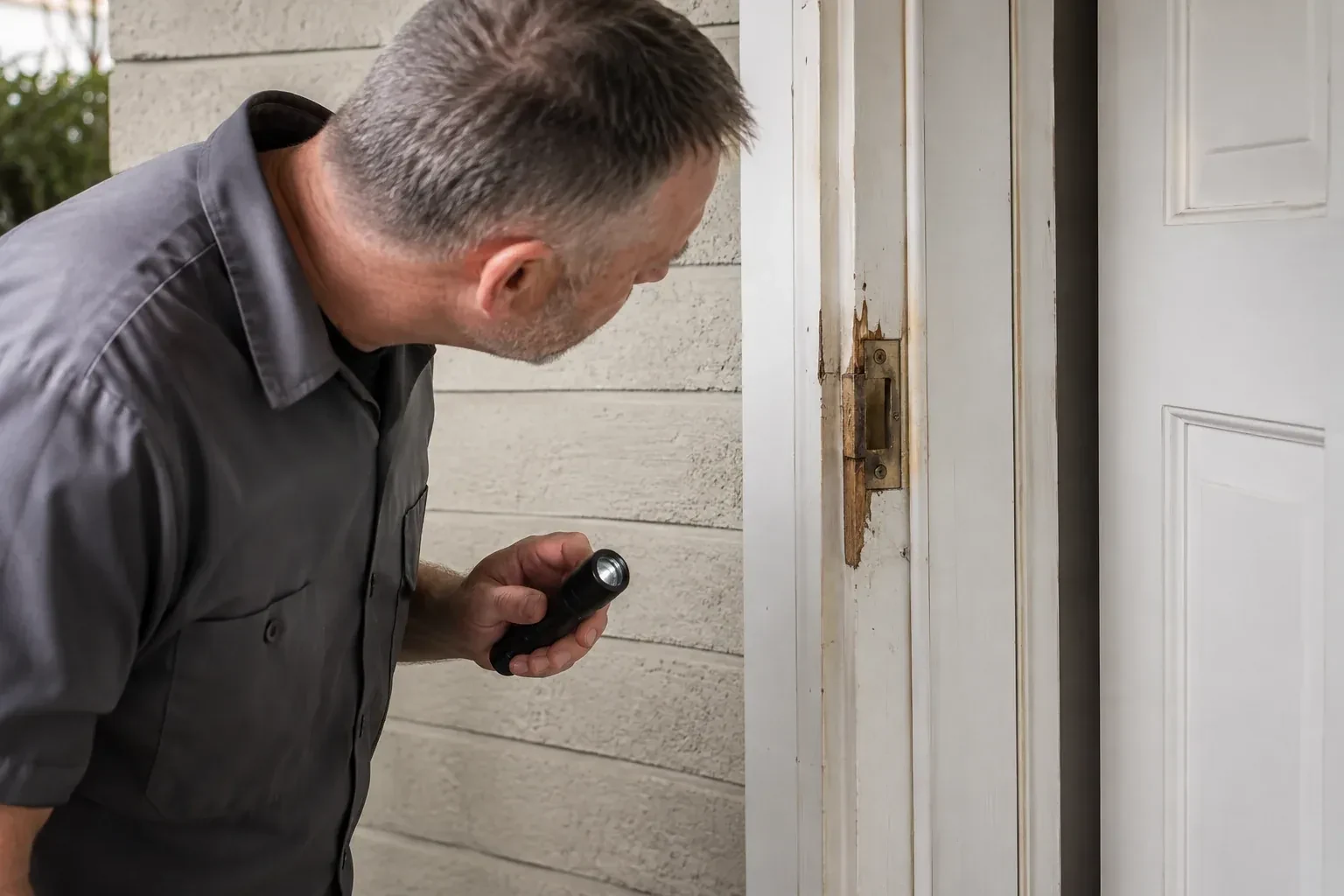
The damage tells the story of the attack, and the story decides the repair. A kick leaves the strike torn out and the jamb split along the grain, often with the deadbolt still thrown and intact. A pry bar leaves a crushed door edge, a bent latch and marks in the weatherstrip gap. A wrench attack twists the cylinder out of its housing and may shear the tailpiece, leaving a bolt stuck in the frame. Broken glass beside the door means the lock was never defeated at all; an arm simply reached the thumb-turn. Each pattern points to a different weak point, so identifying it first keeps the repair aimed at what actually gave way.
Rebuilding the strike side
The strike is where most forced doors failed, so it is rebuilt rather than reattached. The old plate comes off and the bolt pocket is cut to full depth, since a pocket that is too shallow stops the bolt from extending completely and leaves it easier to push back. A security strike with a boxed pocket is set flush into the jamb, its long screws driven through the jamb and shim space into the wall stud, with the longest screws placed nearest the door stop where the bolt bears. Pilot holes are drilled first so the screws seat without splitting the repaired wood. The bolt now pushes against framing lumber instead of two short screws in soft trim.
A door that closes and locks again
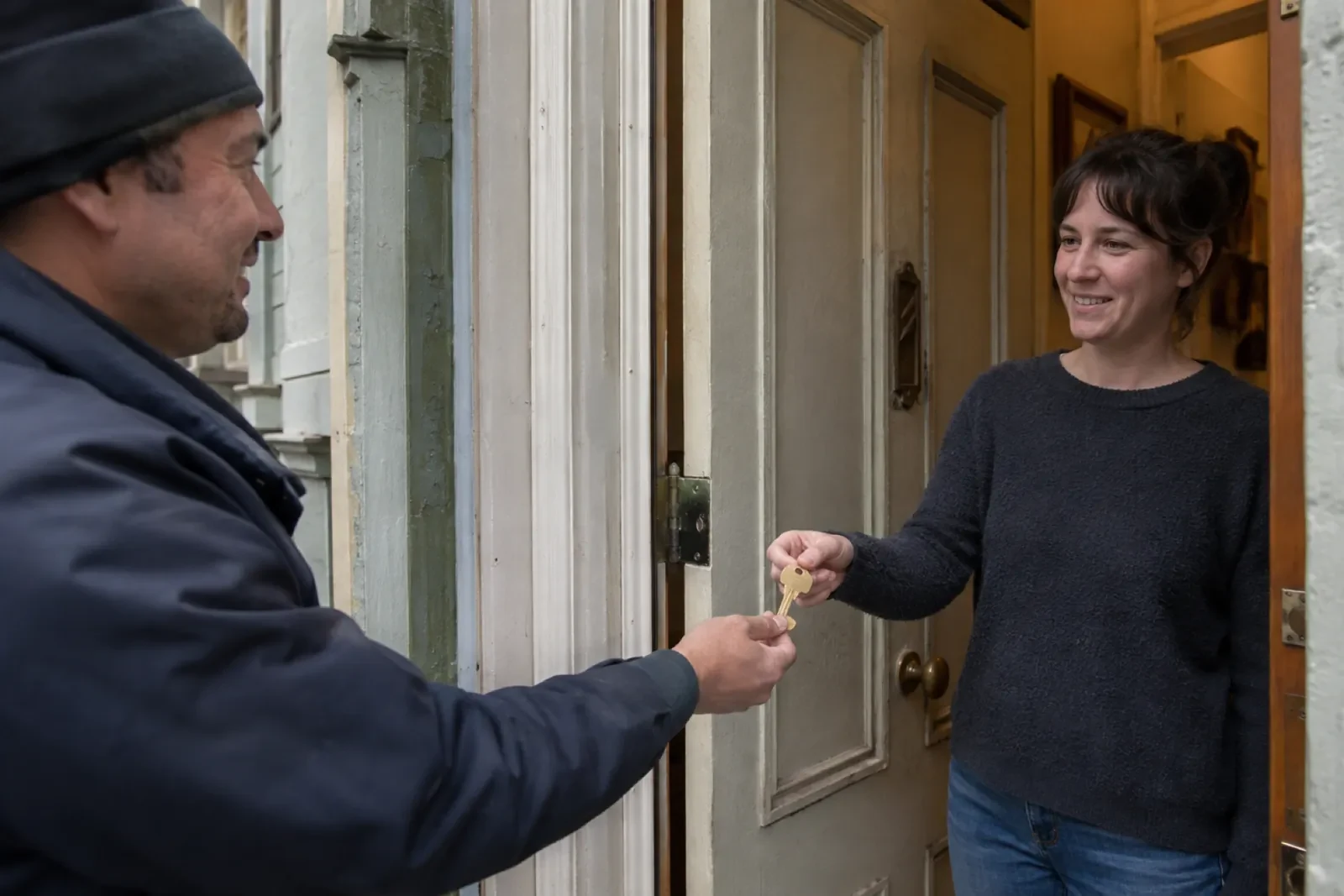
The visit ends with the door tested the way it will be used. The bolt is thrown and withdrawn with the door open, then closed, and it must slide home without dragging on the strike or stopping short of full extension. The latch catches when the door is pushed to, not slammed. The door meets its weatherstrip evenly and the thumb-turn works from inside without a key. You try it yourself before the locksmith packs up, with your own new key, so the first time the household locks up that night is not the first time anyone has tried the door.
Break-In Damage Lock Repair
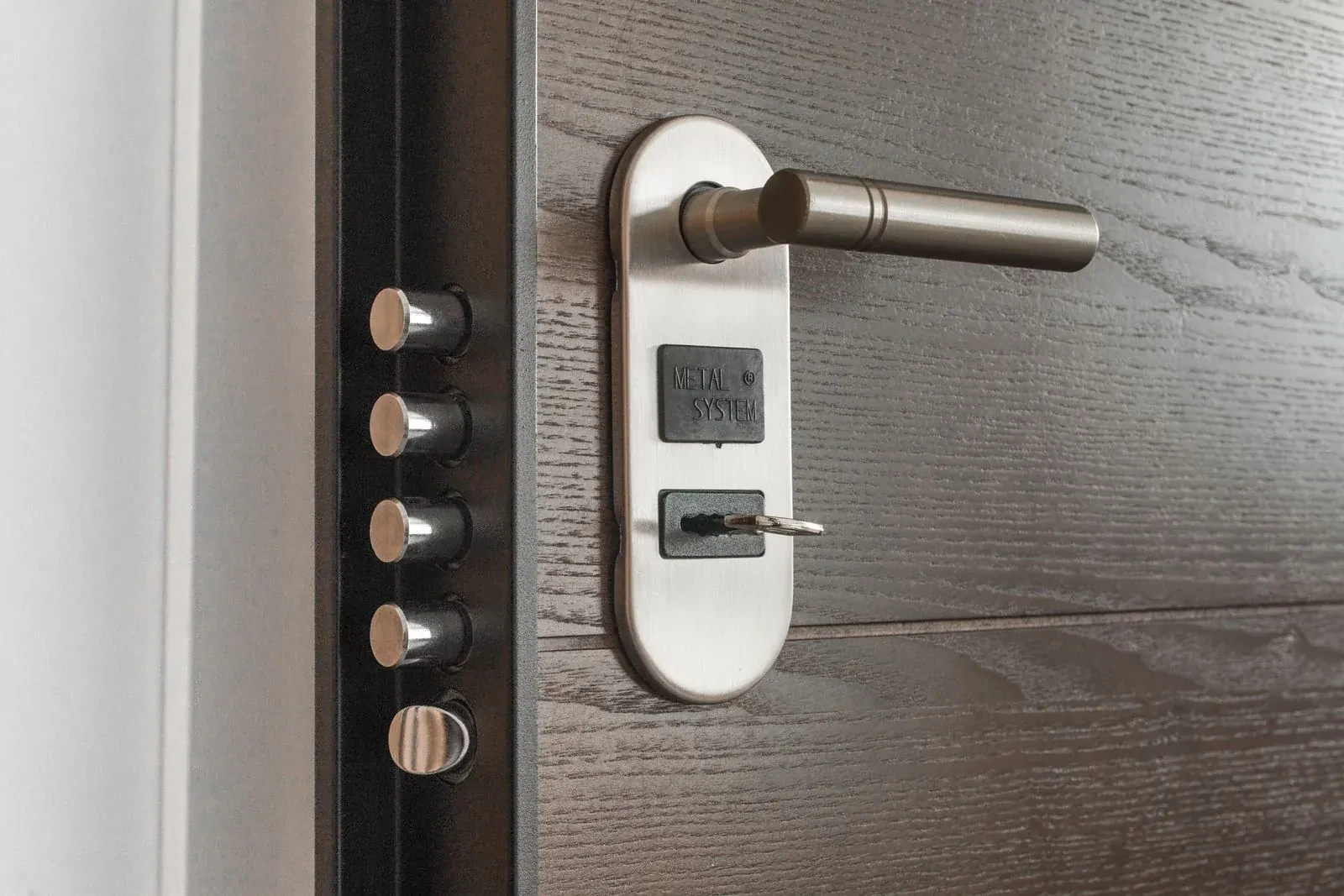
In the van
Plywood and cleats for boarding
Latch guard plate
Wrap-around door edge reinforcer
Two-part wood epoxy and shims
Three-inch strike and hinge screws
Break-In Damage Lock Repair
What affects the quote
Door and frame material
A wood jamb over a stud takes standard reinforcement. Steel frames, jambs on masonry, fibreglass doors and aluminum storefront stiles each need their own fasteners and methods, which changes both labour and parts.
Strike and hinge reinforcement
A security strike box, hinge reinforcement plates and three-inch screws on both sides of the door are listed as their own items, so you can see what strengthens the frame beyond replacing what broke.
Number of cylinders rekeyed
Every lock a taken key fits is rekeyed individually, so a house with four exterior doors, a mailbox and two padlocks is more work than one front door. Bringing them all onto a single key is part of the count.
What to have ready
- Have the police been called, and do you have an occurrence number?
- Have you photographed the damage as you found it?
- Is this a suite door in an apartment or condo building?
Break-In Damage Lock Repair: questions
QuestionsHow do I check that the repair is holding over the following months?
Once a month for the first season, throw the deadbolt with the door closed and feel for drag or a stop short of full extension, and press on the strike and hinge screws with a screwdriver to confirm they are snug. Repeat at each change of season, since wood moves with humidity. A door that starts needing a shoulder, or a bolt that catches on the strike lip, wants a small adjustment early rather than a repeat of the original problem.
Will my door be boarded up, or can it be made to lock tonight?
Most forced doors lock again during the visit. If the slab and frame are sound, a new lockset goes in and the strike is reinforced. If the jamb is split, a repair plate or a boxed strike screwed into the stud usually holds it. Boarding is reserved for openings where the frame or the door itself is destroyed, and even then it is fitted so the household can get out from inside without a key.
What is a security strike box and why fit one?
A security strike is a heavier plate with a formed steel pocket that wraps around the bolt instead of leaving it in bare wood. It is set into the jamb and fixed with long screws, typically three inches, that pass through the jamb and the shim space into the framing, with the longest screws placed nearest the door stop where the bolt bears. Manufacturers specify the pocket depth so the bolt extends fully. The result spreads a kick across the wall stud rather than two small screws.
Related services
- Business Lockout ServiceYou signed the lease on the unit last week and the landlord handed over possession, but the previous tenant's locks are still on both doors and no keys came with them.
- Broken Key ExtractionIn the parking lot your car key snapped in the driver's door.
- Seized & Jammed Lock OpeningThe lock works, but only if you lean on the door with your hip while turning the key.