Car keys · Newmarket
Spare Car Key Duplication
A teenager just passed a driving test and reasonably wants a key of their own rather than negotiating over the family's single copy every time the car is needed.
In plain words
Households with more than one driver and one car key end up trading it back and forth, which works until two people need the vehicle at once. Making a second key from the original lets each driver carry their own, cut from the same blade profile and carrying the same chip or code the immobilizer recognizes, so neither key behaves differently from the other. The locksmith tests both apart from each other in the doors and the ignition before handing them back, and a family running two vehicles on the same lock family can sometimes be brought onto one key altogether.
How the visit goesThe proximity fob has ridden in a pocket for years, the range feels shorter than it used to, and a dashboard warning mentioned a battery a while back. Nobody has sorted out what happens on the day it finally goes dark.
Spare Car Key Duplication
How the visit goes
Confirming who the vehicle belongs to
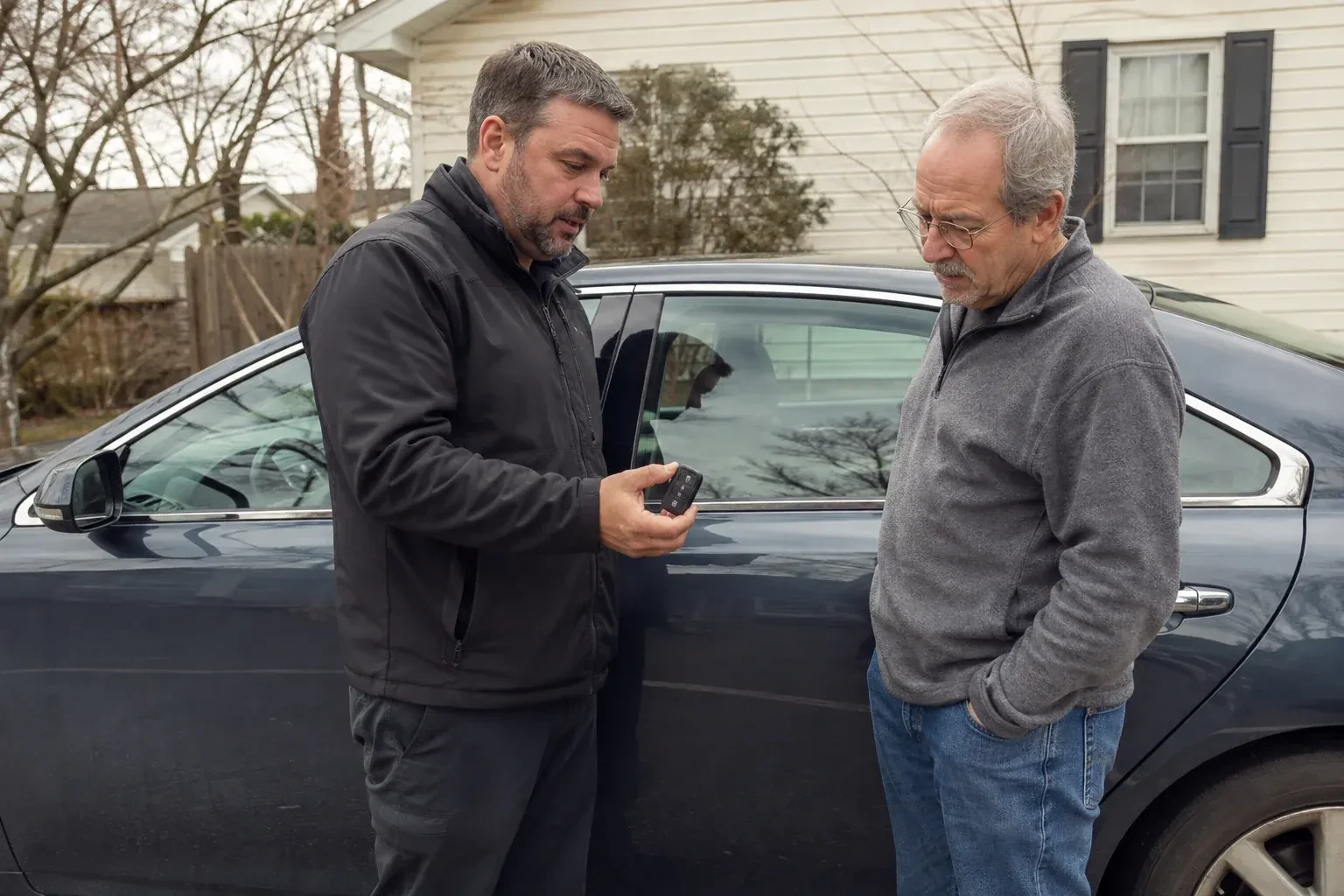
Before a blank is cut or a chip is touched, the locksmith establishes who is asking and their authorization for the vehicle: a piece of photo identification alongside registration matching a name and address, or another document connecting that person to the car. A rental, a company vehicle or a car still financed through a lender may need an extra document confirming who is authorized to hold a key to it. This check is made at every visit rather than assumed from an earlier one, since who owns or is authorized to use a vehicle can change between one spare and the next.
Cutting the blade
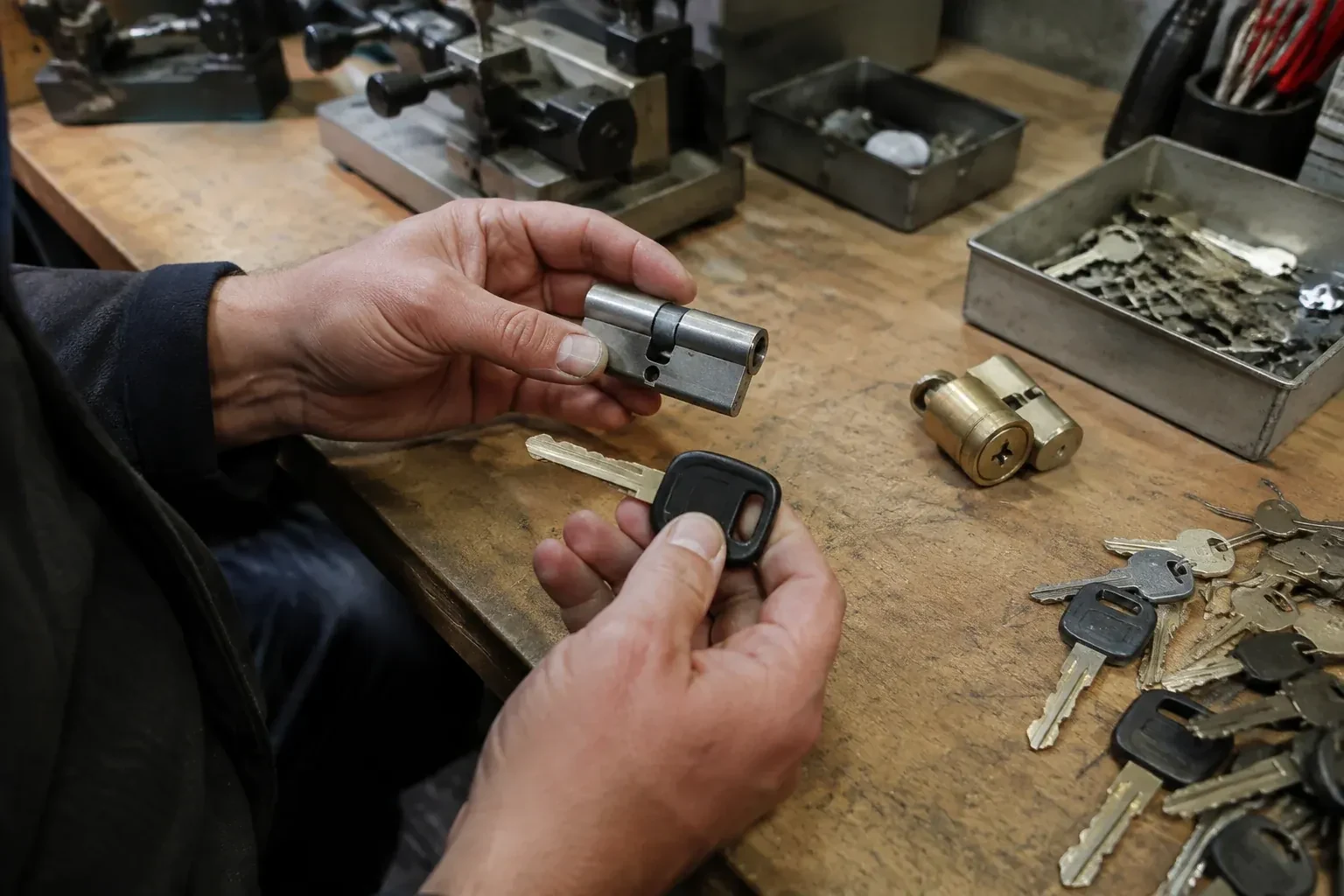
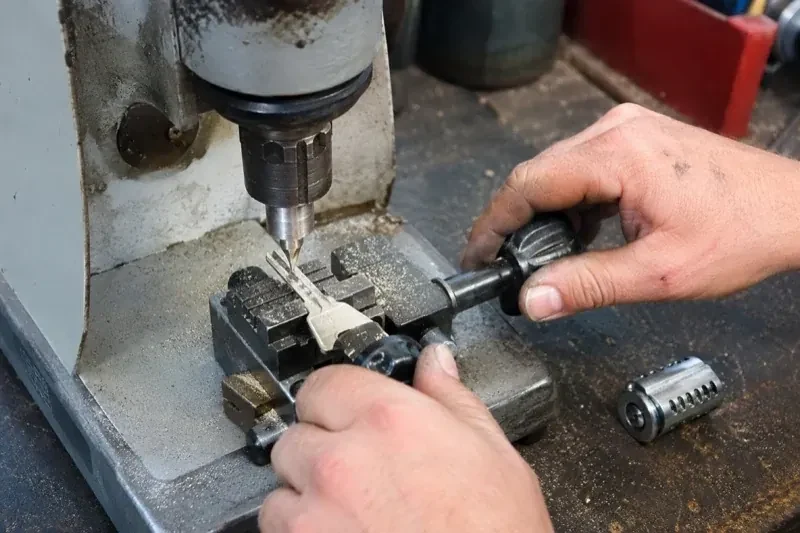
A mechanical duplicate is produced either by tracing the original on a key-cutting machine, which follows every notch of the existing blade into a fresh blank, or by cutting to a factory code pulled from the VIN and the lock manufacturer's records. Code-cutting is used when the original is too worn to trace reliably, since copying a worn blade would simply pass its rounded edges on to the spare. Either way the new blade is deburred and test-fitted into the door or ignition lock before any electronic work begins, so a mechanical problem is caught early rather than blamed on the chip later.
A record worth keeping
A short note of how many keys exist for the vehicle, what each one can do, and who holds it is a small thing to write down and a genuinely useful one to have later, whether that later is a private sale, an insurance question, or simply working out which key someone borrowed and forgot to return. This record also makes any future visit faster to start, since a returning locksmith or a different one entirely can begin from a known baseline instead of counting keys from scratch.
Spare Car Key Duplication
In the van
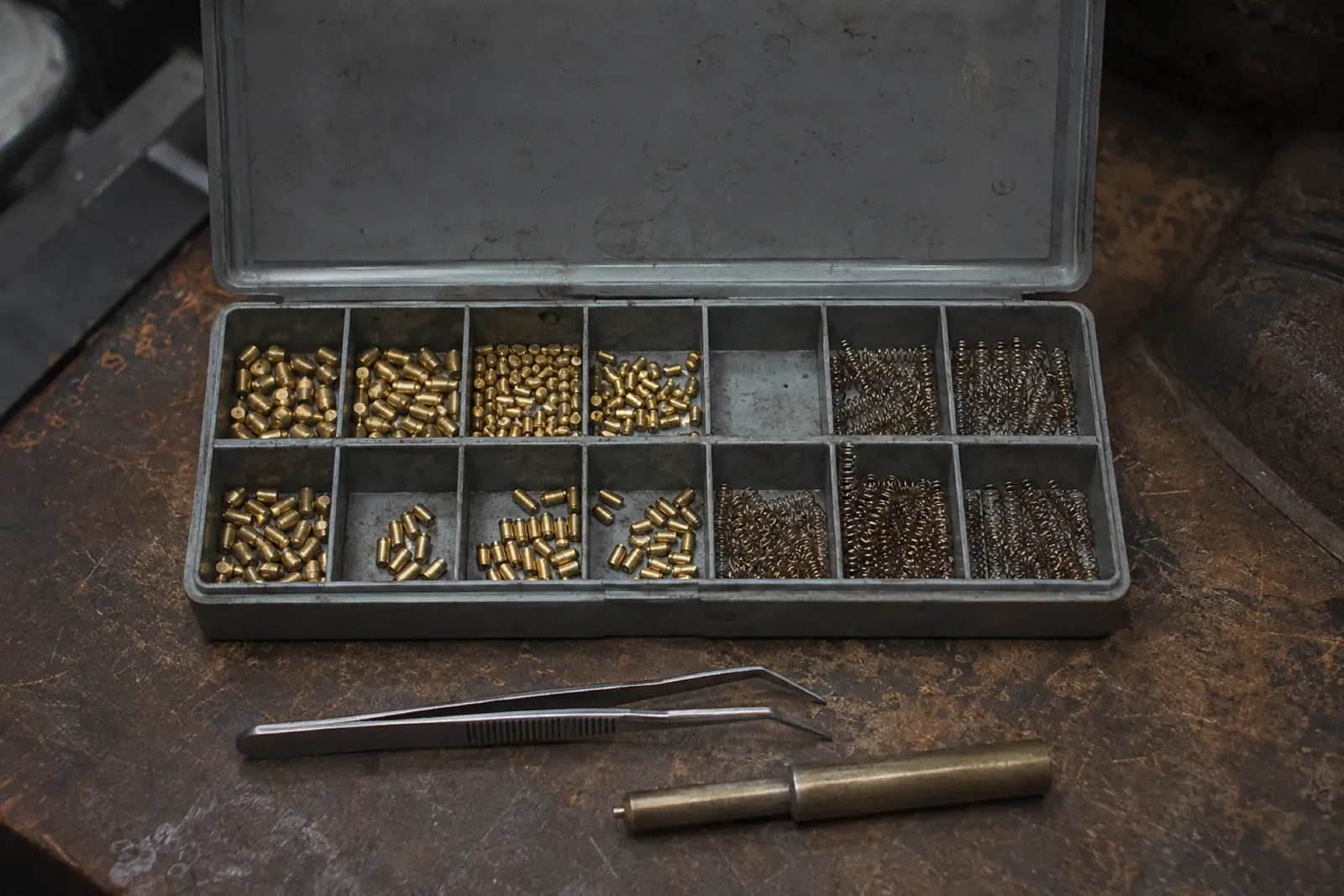
Key blank matched to blade profile
Coin-cell fob battery
Diagnostic port programming interface
Transponder chip
Deburring file
Spare Car Key Duplication
What affects the quote
Which key system the vehicle uses
A plain mechanical blade, a transponder key, a remote-head key and a proximity fob each call for different tools and different amounts of time, so identifying the system early shapes the whole quote before any cutting or programming starts.
Timing around the day's other calls
A visit that fits between other scheduled stops is generally simpler to arrange than one needing a dedicated block of time set aside on its own.
Sourcing the blank or shell
Common platforms use blanks kept in regular stock, while a less common model or an unusual shell sometimes has to be sourced specifically for that vehicle before work can begin.
What to have ready
- Has the vehicle had an aftermarket alarm or remote starter installed?
- Do you know the VIN, or can you access the door jamb?
- Do you currently have one working key, or more than one?
Spare Car Key Duplication: questions
QuestionsWill the spare include the remote buttons?
If the original has remote buttons and you want the spare to match, yes: the new key or fob is programmed to the vehicle's receiver so locking, unlocking and any other remote function respond the same way from either key. If a simpler spare is preferred instead, the remote portion can be left out while the chip that starts the car is still fully recognized.
What is the difference between a transponder key and a smart key?
A transponder key still has a blade you insert into the ignition, with a chip in the head that the immobilizer checks once it is turned. A smart or proximity key usually stays in a pocket or bag; the vehicle senses it nearby, unlocks the doors, and starts with a push button rather than a turned key. Both rely on the same underlying idea, an electronic identity the vehicle recognizes, delivered in different ways.
Can spare keys be made for older vehicles without a chip?
Yes, and it is usually the most straightforward version of this service. A vehicle old enough to use a plain mechanical key has no chip to read or program, so the whole job is cutting a matching blade, either traced from the original or cut to code, and testing it in every lock the first key opens.
Related services
- Car Key ReplacementThe car is yours now, but somebody else still holds a key to it.
- Key Fob ProgrammingA new driver has joined the household, and the one existing fob is the only key anyone has ever had cut for this vehicle.
- Transponder Key ProgrammingEvery key that ever opened the car is gone at once, one taken with a stolen bag, the spare misplaced months ago and never replaced.