Car keys · Newmarket
Motorcycle & Scooter Keys
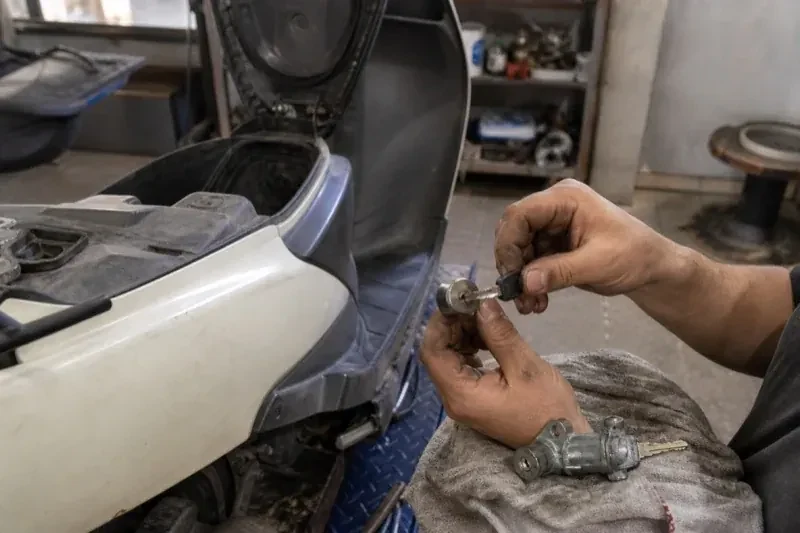
Two keys came with the scooter: one for the ignition and steering, an entirely different one for the seat and the storage compartment underneath it, so opening the seat means carrying twice the metal.
In plain words
Locks that sit through a season of outdoor storage or freeze-thaw weather often need more than a fresh key. A steering-head lock that has seized is diagnosed first, then freed with the cleaning method its maker directs and gentle working of the mechanism rather than force on the key, since a harder twist is more likely to snap a blade than move a stuck lock. Once the lock turns freely, cutting or duplicating the key proceeds the normal way, and a season's worth of grit is cleaned out of the mechanism at the same time.
How the visit goesA copy cut at a hardware kiosk turns the ignition on some mornings and skips it on others, occasionally sticking halfway and needing a wiggle that the original key never required.
Motorcycle & Scooter Keys
How the visit goes
Any prior work or damage
Before starting, the locksmith asks whether anyone has already tried to open or copy the lock: a hardware-store duplicate that never worked well, a bent key left in the barrel, or an attempt with an improvised tool that scratched the keyway. Any of this changes what is found once the lock is opened up, and knowing about it in advance means the owner is told plainly what was already there rather than assuming new damage happened during the visit. It also sometimes explains a wafer that has been sitting slightly out of place for months.
Bringing every lock onto one key
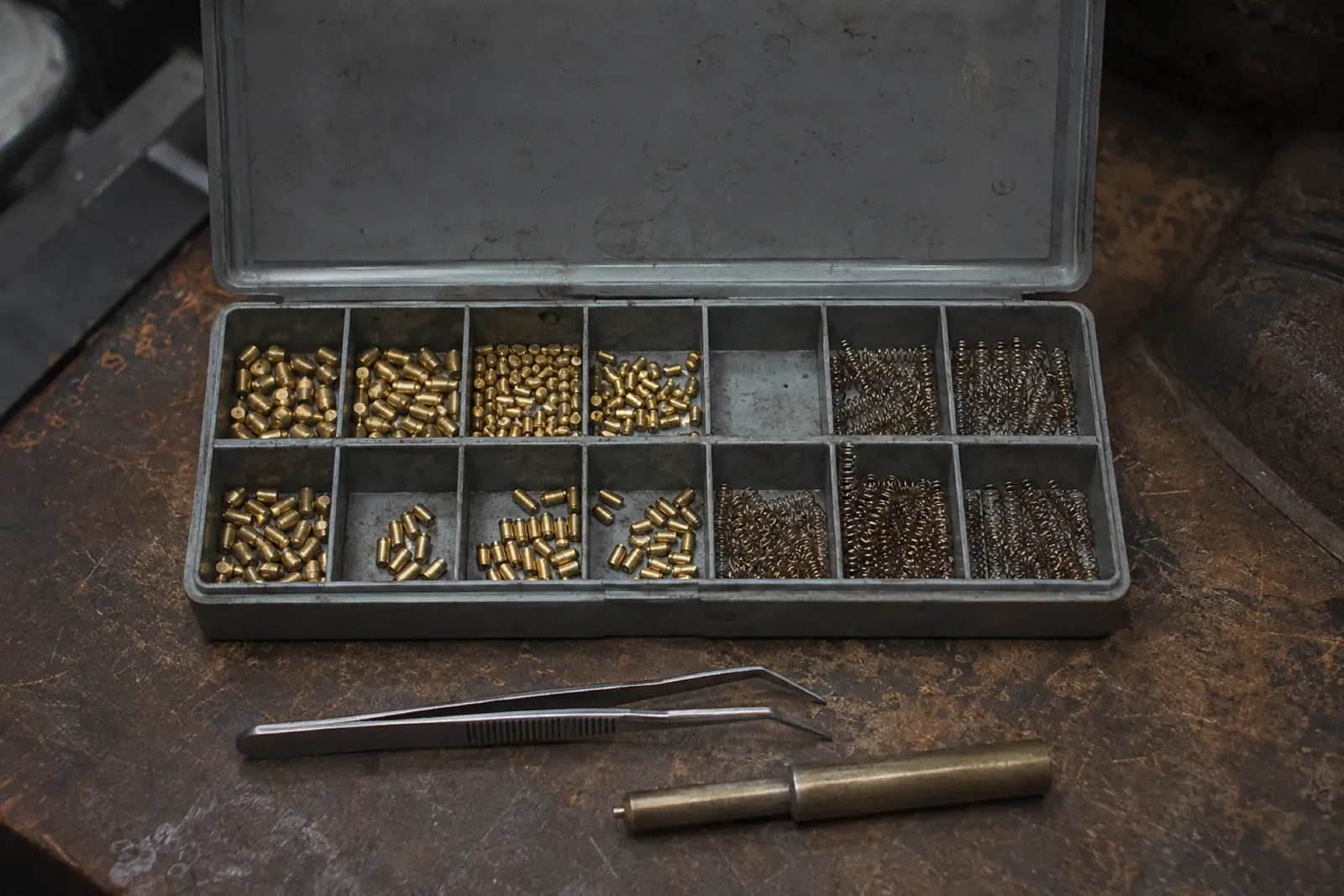
Where the cylinders are compatible and serviceable, bringing the seat, fuel cap and storage locks onto the ignition's key means opening each one in turn, removing its wafer pack, and fitting new wafers cut to the same combination as the freshly cut ignition key; some models instead need a matched replacement lock set. This is the same rekeying principle used on a house or car lock, applied to the smaller hardware found on a motorcycle. Each lock is tested with the new key on its own before the job is called finished, so the owner leaves with one key that genuinely operates every lock on the machine rather than one that has simply been told it should.
A record worth keeping
A short written note of what was done, whether the lock was cut from an existing key, decoded from scratch, or paired as a new transponder, is worth keeping with the machine's other paperwork. It answers a question that often comes up later: whether a particular key is original or a replacement, and whether other locks on the bike were brought onto the same cut. For a machine that changes hands again down the road, that note saves the next owner from starting the same process from a single worn key and no history.
Motorcycle & Scooter Keys
In the van
Manufacturer-approved lock cleaner or lubricant
Penetrating fluid
Replacement ignition or steering lock
Replacement transponder chips
Pick and tension tools
Motorcycle & Scooter Keys
What affects the quote
Make, model and age of the machine
Make, model and age decide how common the keyway and blank are. A widely used platform is usually the more straightforward case; an uncommon or older machine can take longer to source parts for.
Condition of the existing lock
A clean, well-maintained lock accepts a new key with little extra work. One affected by corrosion or grit may need cleaning or light service before a key can be tested reliably against it.
Condition of the steering lock
A steering lock that turns freely adds little to the visit. One that has seized from weather or disuse needs patient freeing before any key can be tested against it, which takes extra time.
What to have ready
- Would you like every lock brought onto one key?
- What is the make, model and year of the machine?
- Where is the machine currently kept?
Motorcycle & Scooter Keys: questions
QuestionsCan a locksmith program a new immobiliser or transponder key?
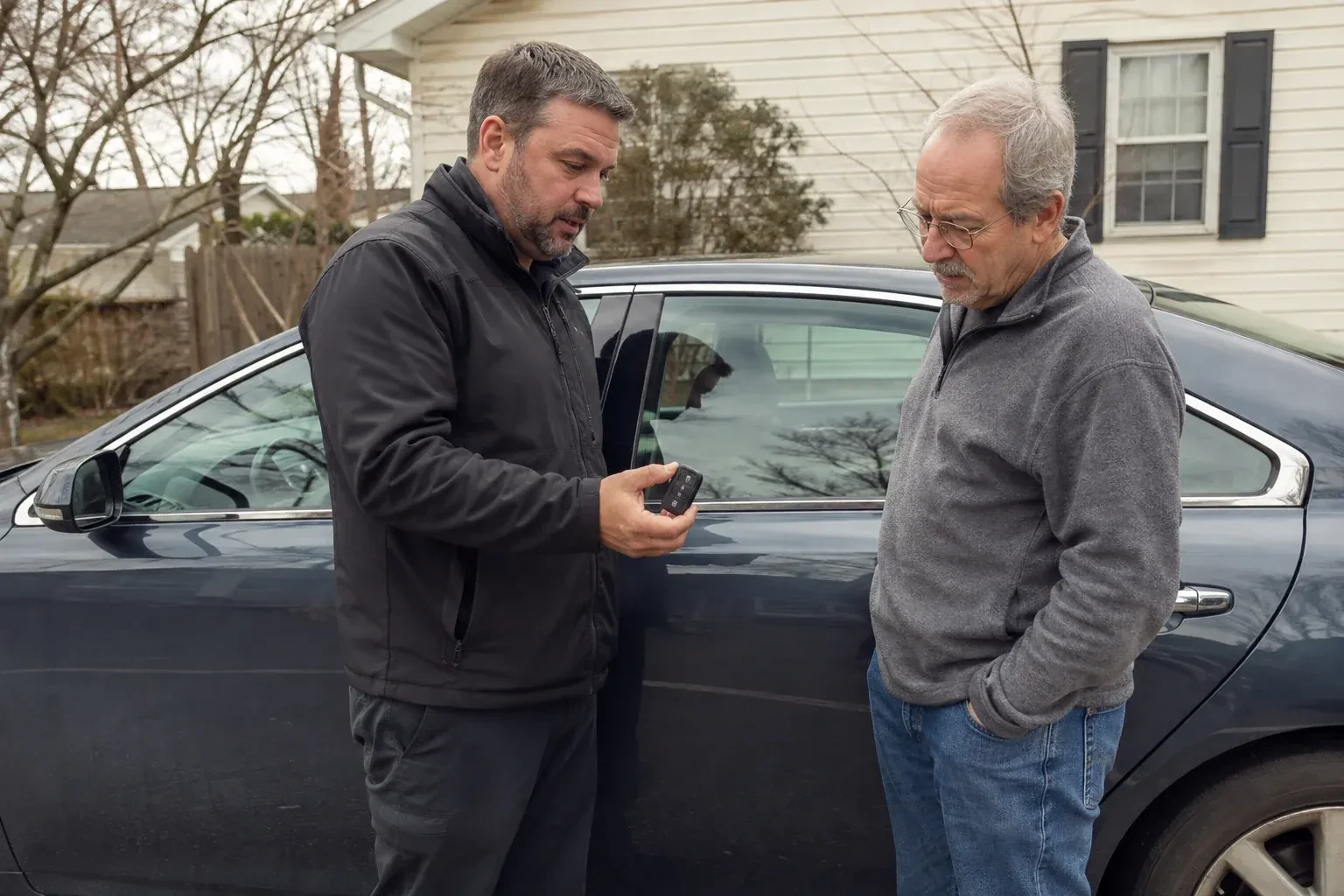
On many machines that carry one. The mechanical cut and the electronic pairing are handled as two separate steps: the key is shaped to fit the lock, then its chip is taught to the vehicle's module using an existing key or programming equipment built for that system, where the maker's own security rules allow it. Both steps are tested with a full engine start, since a key can turn the switch and still fail to start the machine if the chip was never paired.
Do I have to have the original key for you to cut a new one?
No. When every key for the machine is gone, the locksmith reads the lock directly, working out each wafer's depth by picking and reading the cylinder or using a decoder built for that keyway, and cuts a fresh key to the code that comes out of that reading. It takes longer than copying an existing key, since every wafer is read individually, but it produces a key that matches the lock rather than a guess.
Would a copy from a general hardware-store machine work just as well?
It can, but motorcycle wafer locks vary between manufacturers even when they look similar, and a generic cutter is not always set up to read the specific depths and keyway profile correctly. A copy that is slightly off shows up as a key that catches or needs a wiggle, which is often what brings someone in after trying that route first. Cutting from the lock's actual code avoids that guesswork.
Related services
- Car Key ReplacementThe car is yours now, but somebody else still holds a key to it.
- Spare Car Key DuplicationA teenager just passed a driving test and reasonably wants a key of their own rather than negotiating over the family's single copy every time the car is needed.
- Key Fob ProgrammingA new driver has joined the household, and the one existing fob is the only key anyone has ever had cut for this vehicle.