Car keys · Newmarket
Transponder Key Programming
Every key that ever opened the car is gone at once, one taken with a stolen bag, the spare misplaced months ago and never replaced.
In plain words
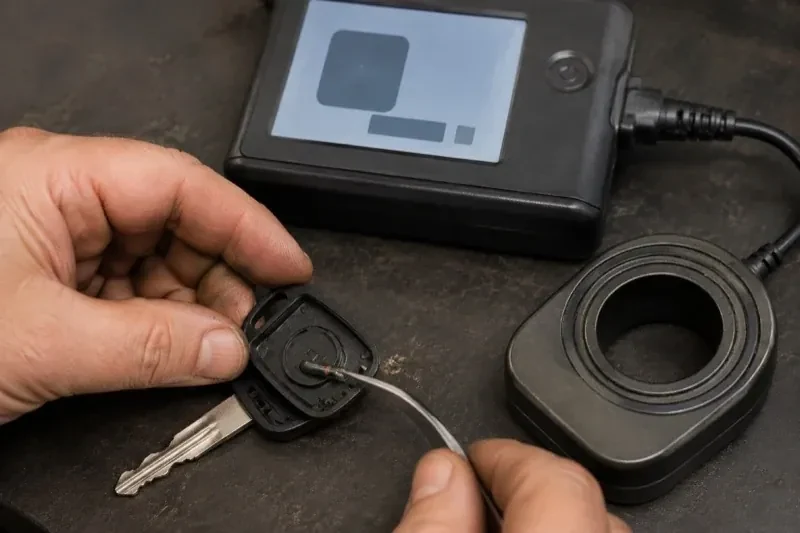
A modern car key is often two systems living in one housing: the transponder, a chip with no battery of its own that only the immobilizer needs to see, and the fob, a battery-powered remote that handles locking, unlocking and alarm functions from a distance. Programming a transponder key addresses the first system, letting the engine start, while pairing the fob addresses the second, restoring the buttons. A key can pass one test and fail the other, so both get checked before the visit is finished.
How the visit goesThe car came with a single key when the sale went through, and that key is the only thing standing between the household and being stranded. A second one has been on the list for weeks, quietly moved down every time something more urgent came up.
Transponder Key Programming
How the visit goes
What the finished set should look like
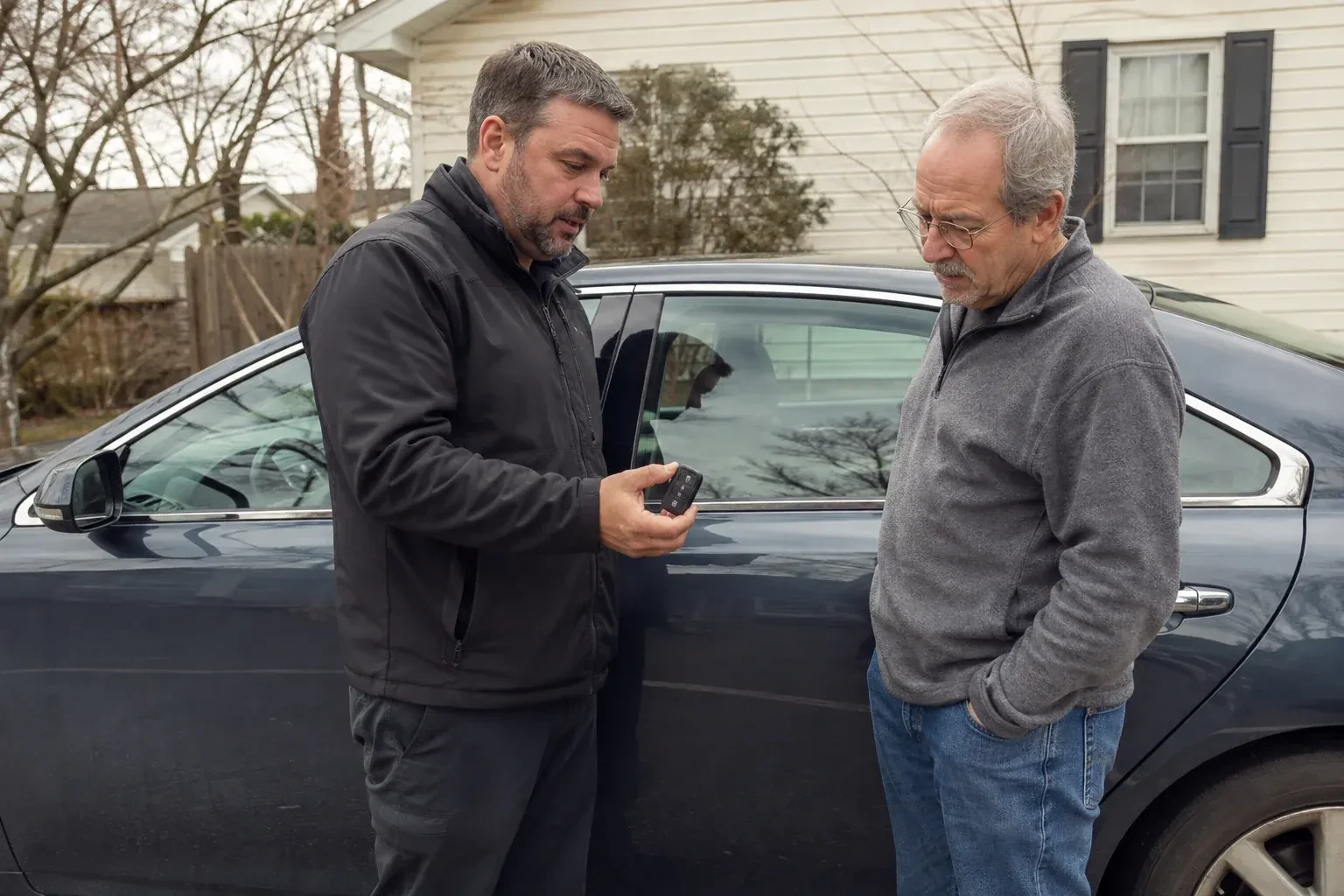
Not every visit ends the same way. Someone who lost their only key wants a working replacement and nothing more. A family adding a driver wants an extra key without disturbing the ones already in daily use. Someone who has never had a spare wants one made and proven before it is ever needed. Asking how many keys should work afterward, and for whom, shapes the whole visit before a single tool comes out, and it is answered in plain terms rather than assumed.
Proving it with the engine, not just the tool
A programming tool reporting success is not where the job ends. Every key that should now work is tried in turn: a cold start, a restart a few minutes later, and several full ignition cycles, because a connection that looks fine once can still be marginal. Remote and proximity functions get the same treatment, tested from a normal distance rather than right beside the vehicle. The visit is only considered finished once every key does what it is supposed to, more than once.
Room for the next driver
Most vehicles can hold more than one or two keys in memory, so adding a second household member later is usually a smaller job than the first visit was, provided at least one working key remains to authorize the addition. Knowing that in advance changes how a household treats an existing key: less like the only copy in the world, more like the first of what could reasonably become several, each one traceable to the same visit that started the list.
Transponder Key Programming
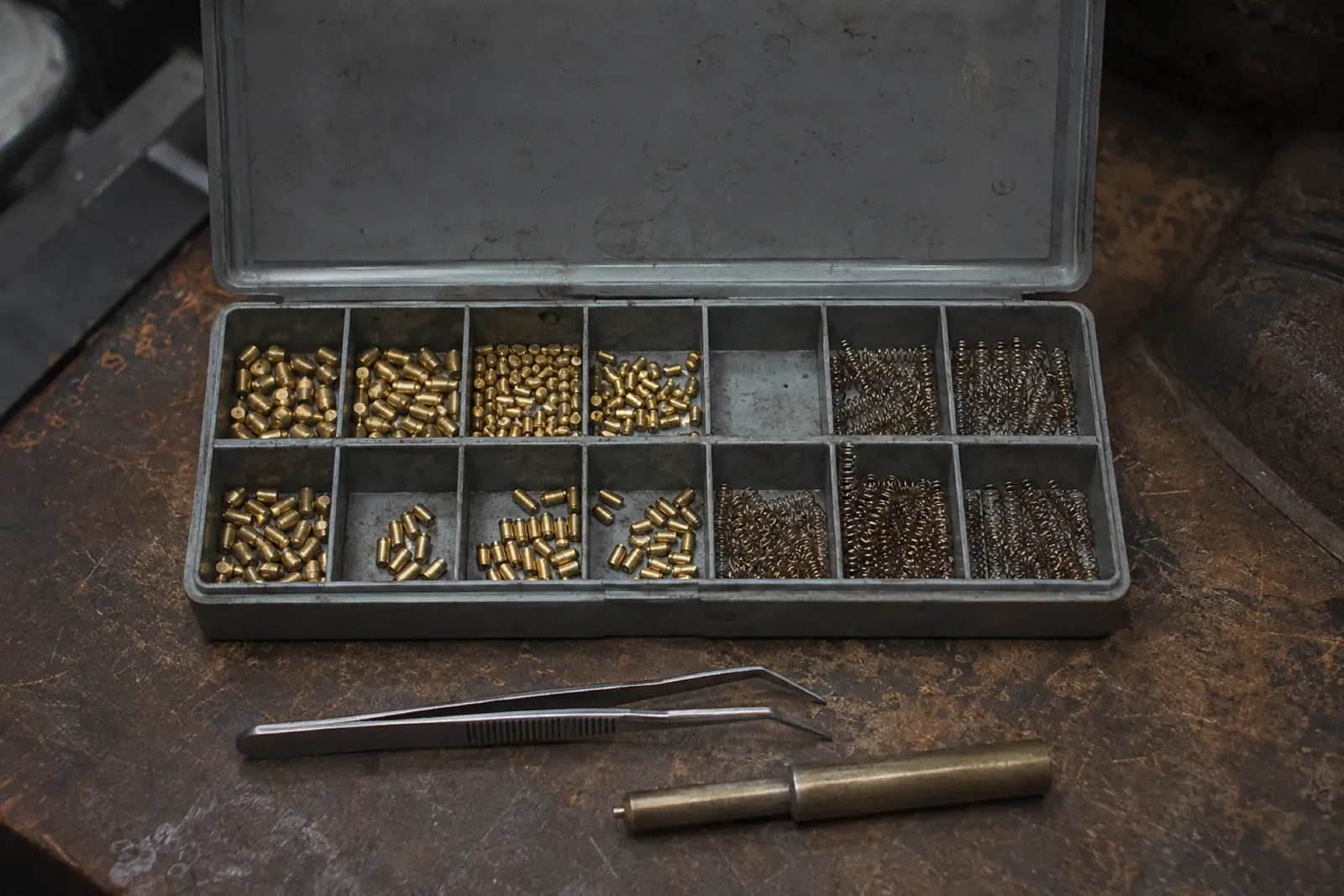
In the van
Replacement remote-head fob
VIN reference tool
Bench programming adapter
Chipped key blank
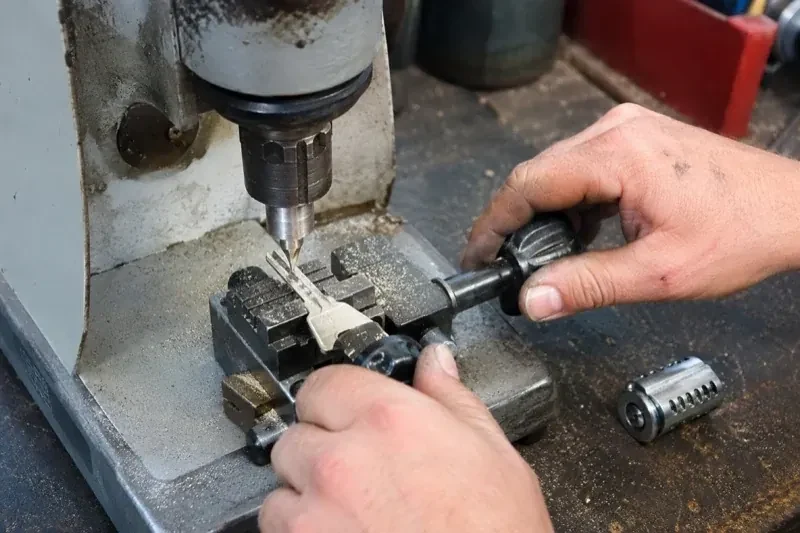
Key cutting machine
Transponder Key Programming
What affects the quote
Any extra function added to the new key
Pairing remote entry, trunk release, or proximity walk-up functions onto a new key is additional work beyond the immobilizer chip alone, and each function is confirmed working before the visit is considered finished.
Whether ownership documents are ready at the visit
Having a vehicle permit or registration and photo identification ready when the locksmith arrives keeps the visit moving directly into the vehicle work, rather than pausing partway through to confirm authorization.
Age and availability of the correct blank or chip
Older or less common vehicles sometimes use a blank or chip family that takes longer to source, particularly for a model that has been out of production for some years, which affects how the visit is scheduled.
What to have ready
- Is the vehicle owned, financed, leased or company-registered?
- Do you have the vehicle permit or registration on hand?
- Is this a lost, stolen, damaged or spare-key situation?
Transponder Key Programming: questions
QuestionsAre some vehicles only able to have keys programmed by a dealer?
Many recent models, particularly ones with additional security layers, require a manufacturer-level session that only certain equipment can reach. Older and simpler systems more often allow direct programming without that extra step. The locksmith can usually confirm which situation applies to a specific vehicle from its year, make and model before the visit.
Does cold weather affect a key or its fob?
The metal blade and the passive chip inside it are not affected by cold. The fob's battery is a different story: cold weather reduces a battery's effective output, which can turn a marginally weak battery into one that suddenly stops responding on a cold morning. Testing a fob's battery before winter sets in catches this early.
Can I have a spare key made before I actually need one?
Yes, and on many vehicles it is one of the more straightforward visits in this service, since a working key already on hand can authorize the new one; a few models instead call for two working keys or a different programming route. The spare is cut, its chip is written in, and both keys are tested before the locksmith leaves, so the spare is proven rather than simply handed over untested.
Related services
- Car Key ReplacementThe car is yours now, but somebody else still holds a key to it.
- Spare Car Key DuplicationA teenager just passed a driving test and reasonably wants a key of their own rather than negotiating over the family's single copy every time the car is needed.
- Key Fob ProgrammingA new driver has joined the household, and the one existing fob is the only key anyone has ever had cut for this vehicle.