Commercial · Newmarket
Access Control Installation in Newmarket
You just leased the empty unit next door and want the new tenant to open their own suite without a key to yours, to the loading dock, or to the electrical room down the hall.
In plain words
Access control installation swaps a shared metal key for an electronic one: a card, a fob, a code, or a phone tap that a controller checks against a list the business manages. When someone leaves the company, their credential is switched off in seconds instead of triggering a rekey of every door they could open. The reader and locking hardware go in at each entrance that needs it, wired to a controller that holds the schedule, and the whole system is handed to the business to run once it has been tested and confirmed working.
How the visit goesThe keypad on the side door has started sticking on cold mornings, codes get shared instead of reset, and half the staff still remember a code you meant to retire two hires ago.
Access Control Installation
How the visit goes

Sorting out a shared entrance
In a multi-tenant building, the survey has to account for doors that are not fully any one tenant's to control: a shared lobby, a parking garage entrance, a rooftop or mechanical room a landlord manages separately. The locksmith works out with the property manager and each tenant which credentials belong on which controller, so a tenant's staff can reach their own suite without gaining access to another business's space or to areas the landlord keeps under its own control, and so a departing tenant's credentials can be removed without touching anyone else's.
Fitting an electric strike
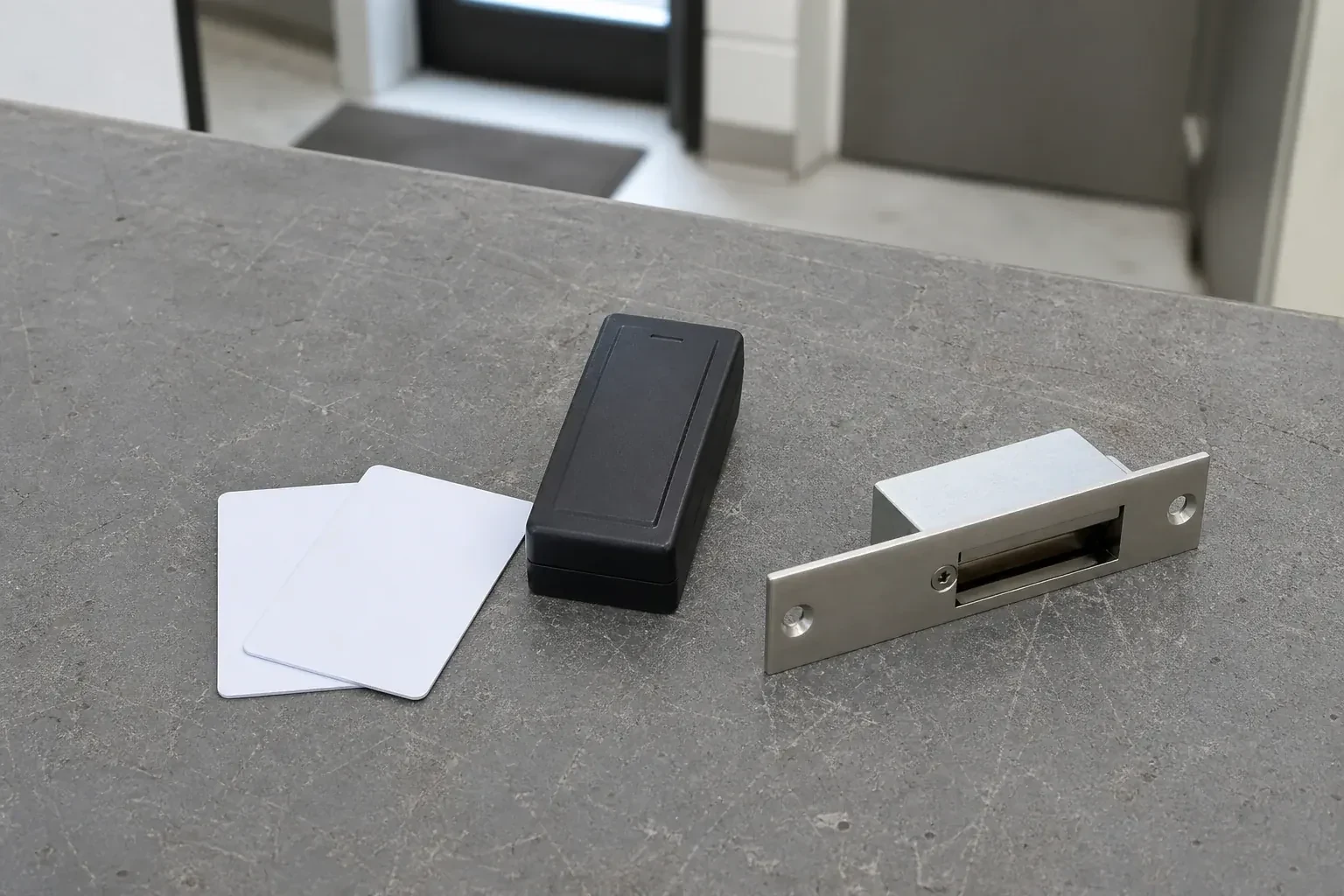
Where the frame allows it, an electric strike replaces the fixed keeper the latch normally strikes against, so the door keeps its existing latch and lockset and simply releases the strike plate when a valid credential is presented. The locksmith mortises the frame to fit the strike body, runs a low-voltage cable within the frame or jamb back to the controller, and sets the strike to hold the door secure until the controller sends a release signal. Because the latch itself never changes, the door still closes and locks normally by hand at any time, credential or no credential.
What the system adds to the rest of the building's security
Once the installation settles into daily use, its value tends to show up alongside whatever else the business already runs: an alarm event that lines up with the person who unlocked the door that morning, a camera clip that can be matched to a specific credential instead of just a timestamp, or a plain answer, finally, to who was in the building last weekend. Getting there can mean linking the access system to the alarm panel or the camera platform, which sometimes calls for extra configuration or an integration licence beyond the original installation, but the controller and the log it already keeps are the starting point either way.
Access Control Installation
In the van
Low-voltage cable
Credential cards and fobs
Keypad readers
Request-to-exit devices
Electric strikes
Access Control Installation
What affects the quote
Distance between the doors and the controller
A building where every controlled door sits close to where the controller will be mounted needs less cable and fewer pull points than one with openings spread across several floors or a large footprint.
How many doors are being controlled
A single entrance and a building with a dozen openings are different jobs in scale rather than kind, and the number of doors, readers and locks involved is the largest single factor in sizing the work.
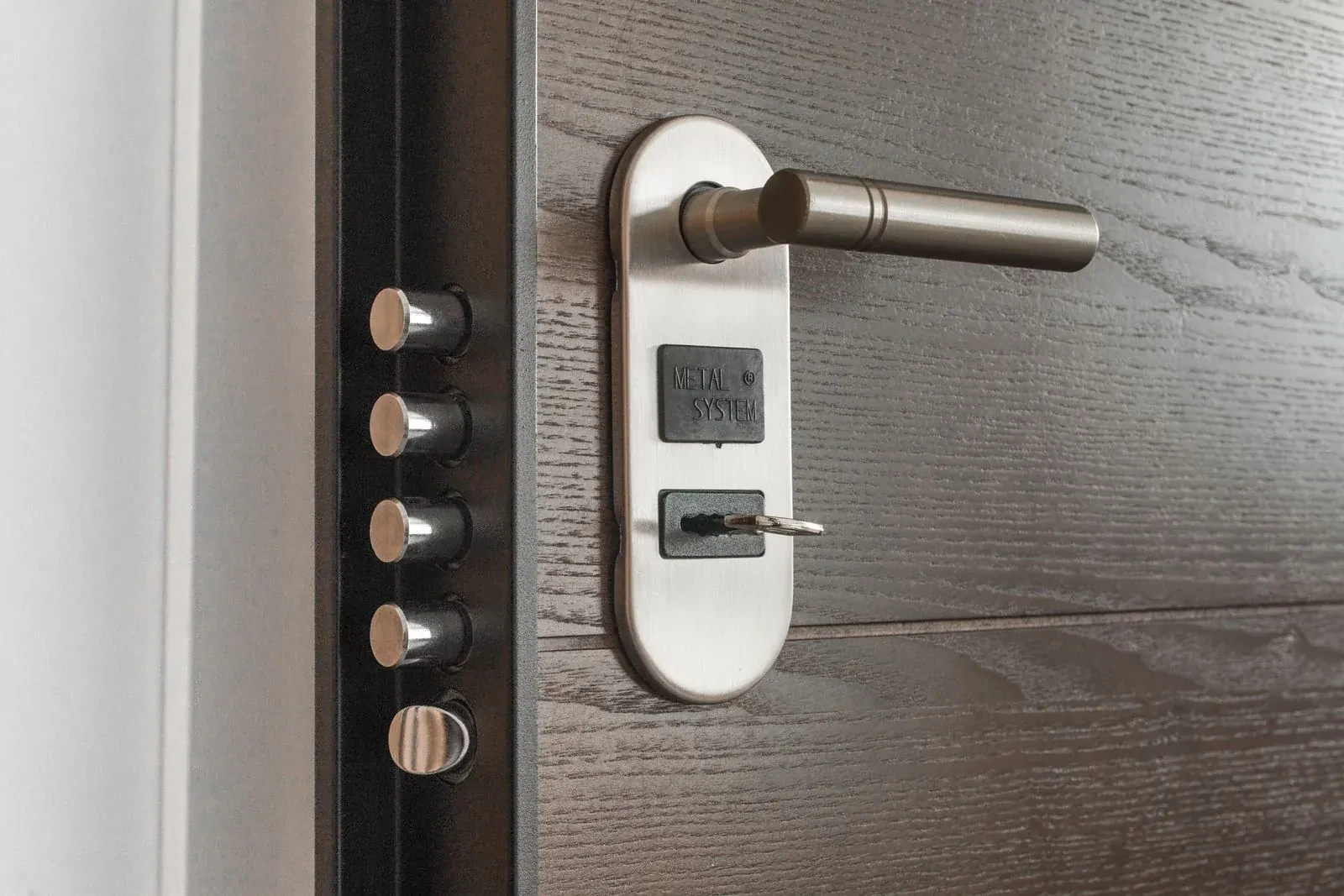
Fitting the mechanical override
Keying an override cylinder into the same system as the rest of the property's keys, rather than leaving it as an unrelated spare lock, takes coordination with whatever keying already exists across the building.
What to have ready
- Who in the business will manage the system once it is installed?
- Is this a single business, or a shared, multi-tenant building?
- Do you already have an alarm or camera system in place?
Access Control Installation: questions
QuestionsCan we see a log of who entered and when?
Yes. The controller keeps a running record of which credential was presented at which door and when, available to the administrator at any time, not only after an incident. It can be checked for a specific door, date, or credential, which is useful for everyday questions as much as investigating something unusual, though it identifies the credential used rather than confirming who was physically holding it.
Can the system be expanded to more doors later?
Yes. A system installed with some spare capacity in its controller and power supply can usually take another door or two by adding a reader and lock and wiring it back in. A door far from the existing wiring can instead run its own standalone unit. Either way, existing schedules and credentials do not need to be rebuilt from scratch.
Will this work with our existing alarm or camera system?
In most cases, yes. An access control installation can be planned to share information with an existing alarm panel, so an arm-or-disarm event lines up with whoever unlocked the door, and with a camera system, so a recorded clip can be matched to a specific credential rather than only a timestamp. The exact integration depends on what the existing alarm and camera equipment support.
Related services
- Master Key System DesignA new hire at the shop gets handed whatever spare key happens to be in the drawer, and it turns out to open the stockroom, the back office and the safe room all at once.
- Panic & Exit HardwareAfter the fit-out, the gym floor now holds more people than the old office space ever did, and the exit door at the back still has the same turn-lock it had when the room held desks.
- Commercial-Grade Lock ReplacementAt closing time the hookbolt on the storefront door catches the keeper only on the second or third try, and one employee has started giving the door a shoulder to force it home.