Commercial · Newmarket
Commercial-Grade Lock Replacement in Newmarket
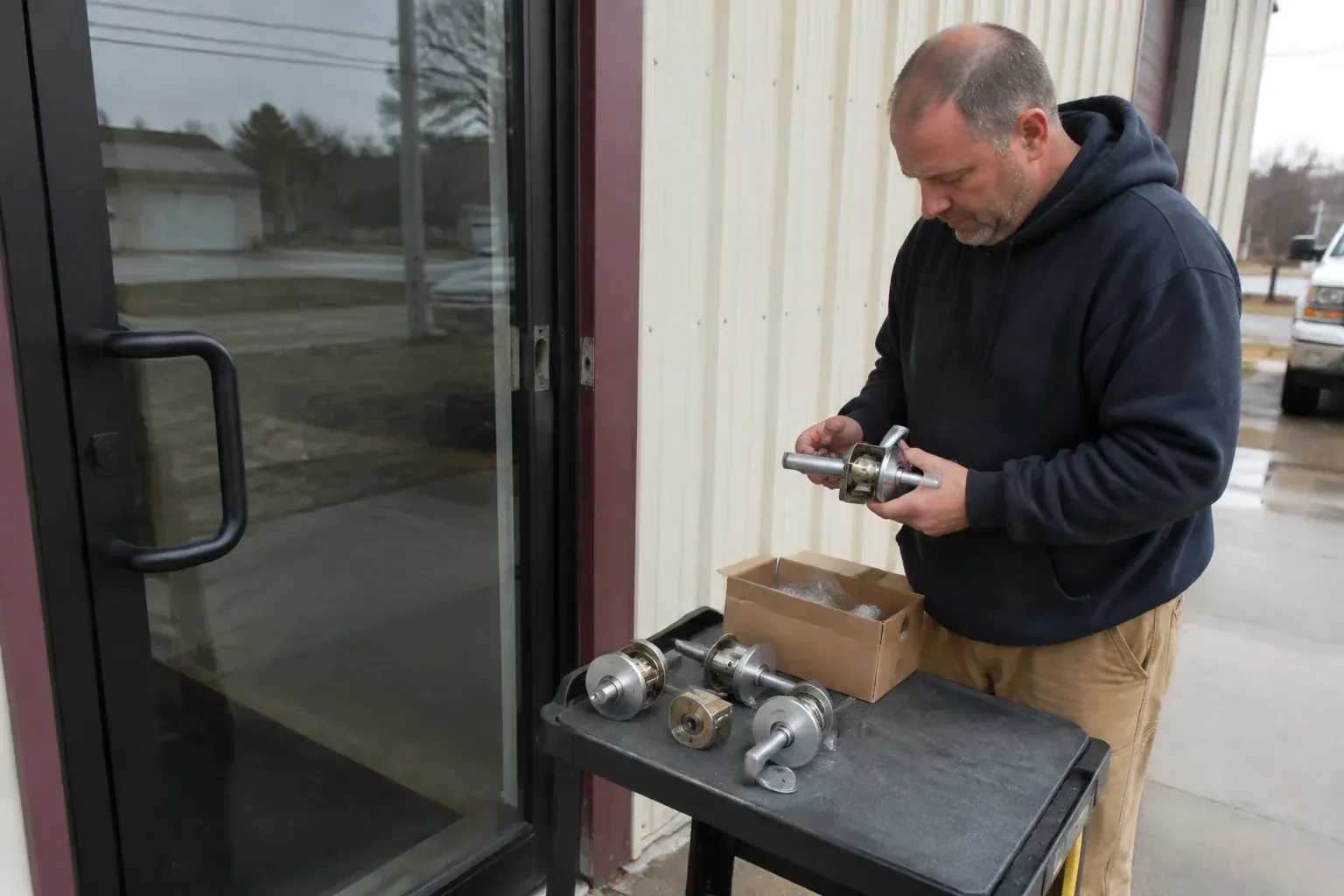
At closing time the hookbolt on the storefront door catches the keeper only on the second or third try, and one employee has started giving the door a shoulder to force it home.
In plain words
Businesses often reach this service after something specific happens: a break-in, a departing employee holding a working key, a lease turnover, or an inspector's note about the rear exit. Whatever the trigger, the work itself follows the same order. The locksmith assesses the door and its current hardware, agrees with an authorized contact on the keying the new lock should follow, fits hardware rated for the opening's construction and use, and connects it to anything else already wired into that door, such as an alarm contact or an access-control reader, before testing and handing the keys over.
How the visit goesAt closing time the hookbolt on the storefront door catches the keeper only on the second or third try, and one employee has started giving the door a shoulder to force it home.
Commercial-Grade Lock Replacement
How the visit goes
Checking how the current lock fits the business's key system
Every commercial building runs some kind of keying logic, even an informal one, and the locksmith maps it before touching hardware: is this cylinder on the same key as other doors, does it belong to a master or grand-master system, is it a standard keyway or a restricted one that only a specific supplier can cut? Getting this picture first means the new hardware can be ordered to slot into that structure, onto a fresh structure the business wants instead, or left standing alone if that is genuinely what is wanted.
Fitting the new lock body or lockset
The new hardware is installed into the existing prep, with the lock body or lockset, strike and any reinforcing plate seated so the door closes without binding. On a narrow-stile storefront door, the hookbolt or deadlatch is aligned so it engages the keeper across its full travel rather than catching on one edge. On a mortise-prepped door, the case is fitted so the trim sits flush and the spindle and cylinder line up with the existing holes cut for them.
A storefront that closes the way it should
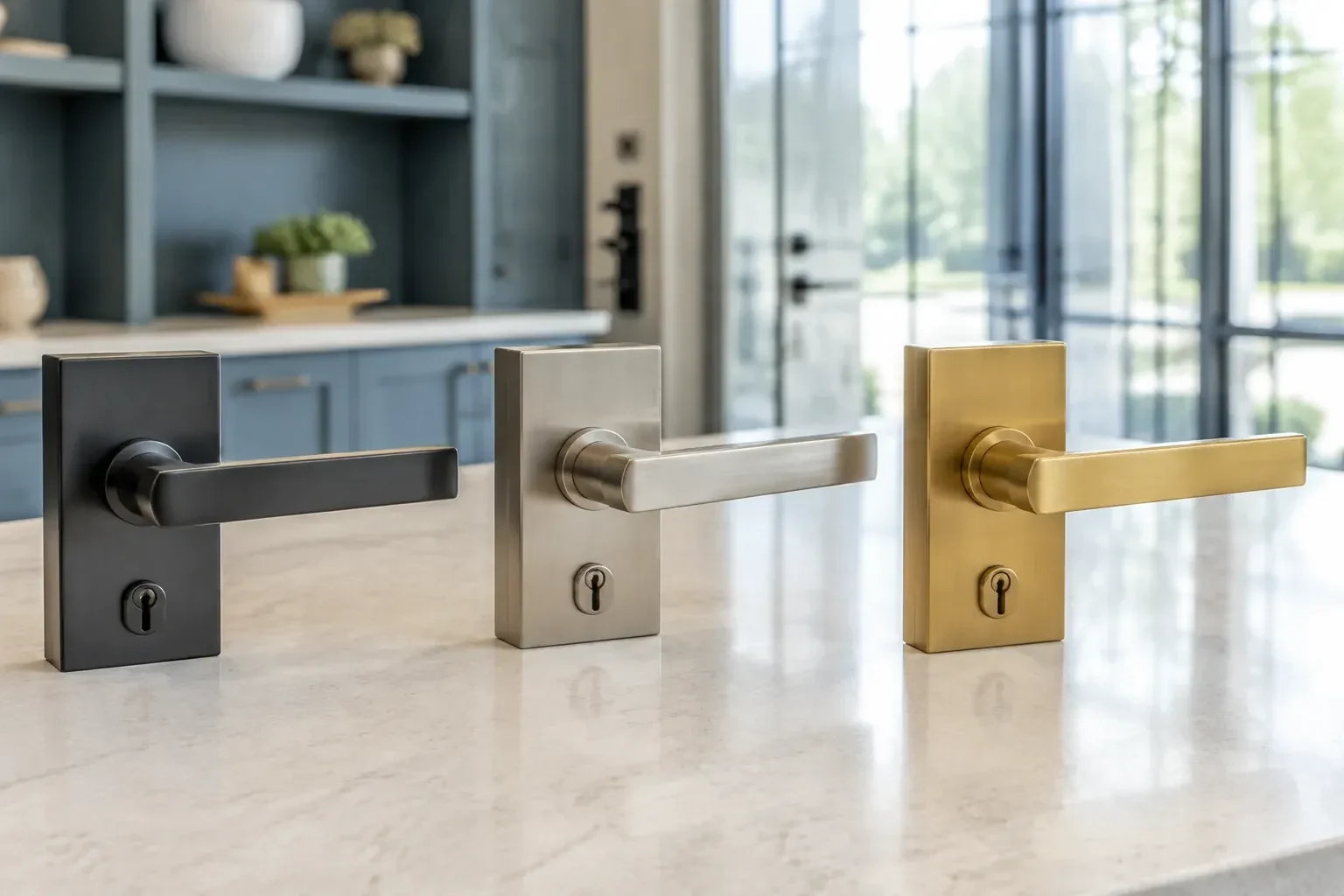
For a narrow-stile or glass storefront door, the finished job means the hookbolt or deadlatch engages fully across its travel every time, without the shoulder-check that a worn or mismatched lock used to need. Staff closing up for the night can throw the lock once and trust it caught, and the business is no longer relying on a habit of double-checking a door that should simply work. The hardware's finish is also suited to public-facing use, holding its appearance under daily handling.
Commercial-Grade Lock Replacement
In the van
Mortise prep and installation tools
Heavy-duty cylindrical lockset
Restricted keyway cylinder
Electric strike
Mortise lock body
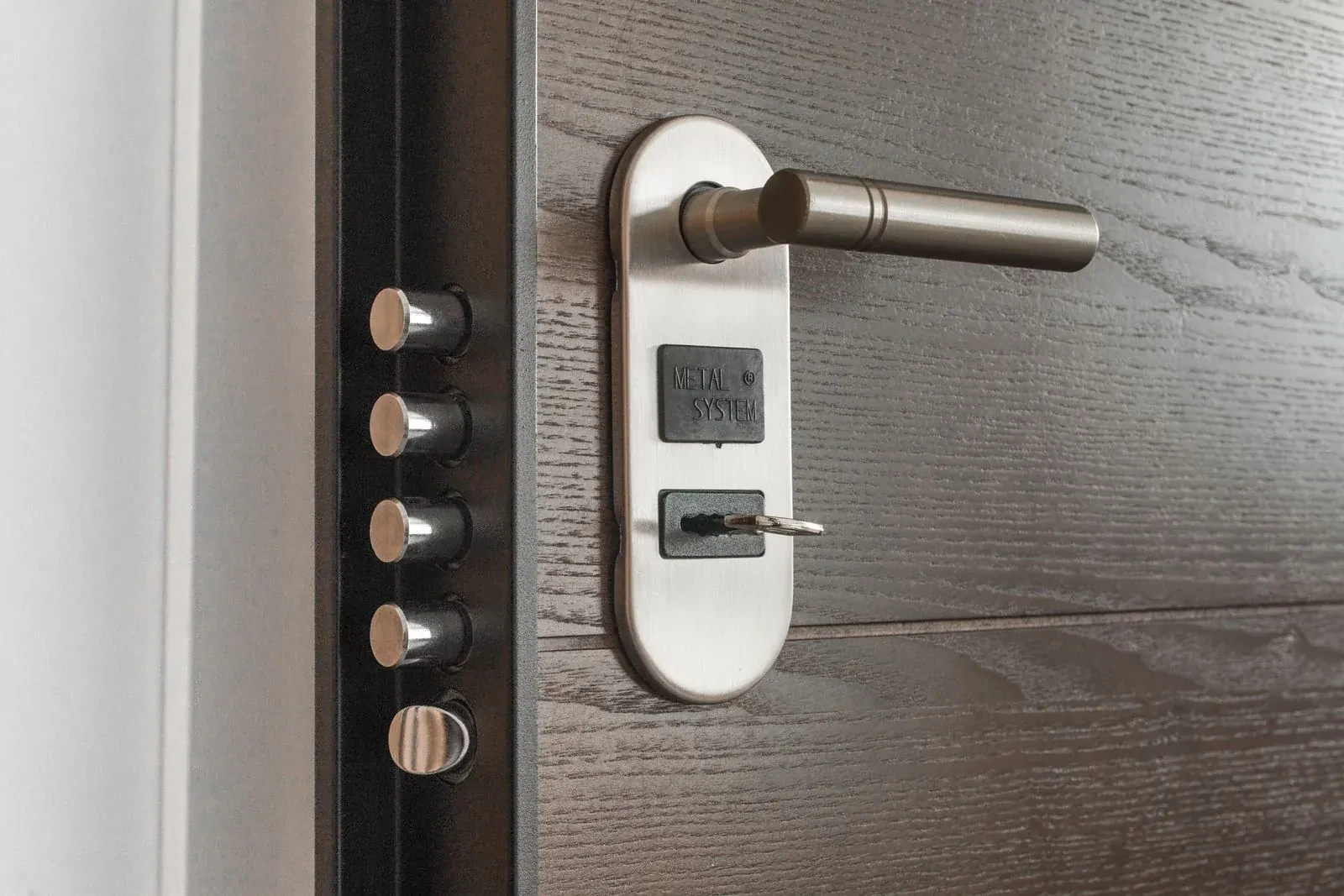
Commercial-Grade Lock Replacement
What affects the quote
Number of keys cut and issued
Keys are counted individually into the quote. A small office needing a handful of keys is a smaller line item than a multi-shift operation issuing keys to a large staff roster.
Restricted or patented keyways
A restricted keyway usually costs more as hardware than a standard cylinder, and duplicate keys are controlled through the manufacturer or distributor rather than cut freely; some restricted programs require formal registration, while others control the same blanks without a signed authorization step.
Timing relative to a lease or renovation
Work scheduled around a tenant turnover, a renovation, or a building-wide upgrade across several units can be planned and quoted as a coordinated project rather than a series of separate calls.
What to have ready
- Roughly how many times a day does this door open?
- Do you have a record of the current keying or key-control log?
- Is the door part of a fire separation or a marked exit route?
Commercial-Grade Lock Replacement: questions
QuestionsCan you upgrade hardware without re-cutting the door or frame?
In most cases, yes. Replacement hardware is chosen to fit the door's existing mortise pocket, bore pattern or narrow-stile prep, so the visit does not usually involve altering the door itself. Re-cutting only comes up when the business specifically wants to change hardware type, for example moving from a knob-and-deadbolt pair to a single mortise lock body.
Do you handle interchangeable-core (IC) cylinders?
Yes. An interchangeable-core cylinder lets an authorized key holder pull the core and swap in a new one when a key needs retiring, without removing the whole lock from the door. Businesses with regular staff turnover often move to this system because it turns a rekey into a short in-house task rather than a full service call every time.
Do you match hardware to my building's existing key system?
Yes, that is usually the first decision made. The locksmith checks whether your doors already run on a master or grand-master system, an interchangeable-core setup, or a restricted keyway, and orders replacement cylinders that slot into whichever structure you want to keep or move to. Bringing a new door onto an existing system is generally simpler than starting that door on its own.
Related services
- Master Key System DesignA new hire at the shop gets handed whatever spare key happens to be in the drawer, and it turns out to open the stockroom, the back office and the safe room all at once.
- Access Control InstallationYou just leased the empty unit next door and want the new tenant to open their own suite without a key to yours, to the loading dock, or to the electrical room down the hall.
- Panic & Exit HardwareAfter the fit-out, the gym floor now holds more people than the old office space ever did, and the exit door at the back still has the same turn-lock it had when the room held desks.