Sharon Locksmith Services · Newmarket
Break-In Damage Lock Repair: what the visit covers
Locksmith · Newmarket, Ontario
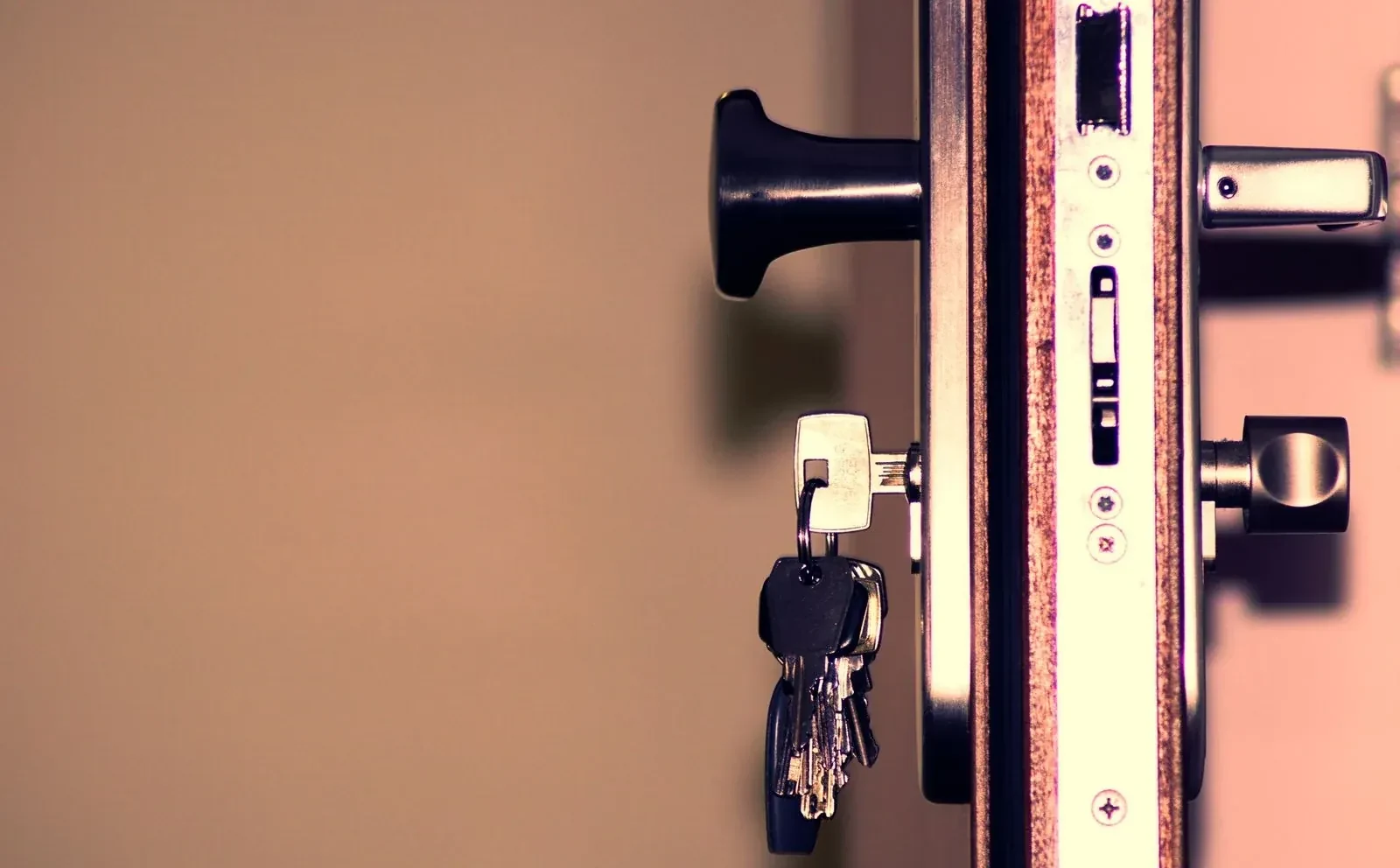
A break-in repair happens alongside a police file and an insurance claim, and a good locksmith keeps both in mind. Before any hardware is moved the damage is photographed as found: door face, edge, strike, jamb, hinges and glass. The old parts are kept for the adjuster unless you prefer otherwise, and the written record at the end lists what was broken, what was replaced, what was reinforced and what is left for another trade. Insurers ask policyholders to document losses, keep damaged property and keep receipts, and this visit produces all three. You choose who does the repair; the locksmith makes it easy to show what it took.
What is behind the jamb
Long screws only help if there is something solid to bite into, so the locksmith looks at how the frame is built. Most house doors have a wood jamb, a shim space and then a stud, and three-inch screws reach through all three. A door beside a sidelight has glass where the stud would be, so fasteners are chosen for that construction instead. A jamb fixed to a masonry return, a steel frame in a commercial building, or a fire-rated suite door in an apartment corridor each call for their own hardware and fixing method. Knowing the wall before choosing the screws is what makes the reinforcement real.
Fitting the new deadbolt and cylinder
The replacement hardware is chosen for the door and for the attack it suffered. A deadbolt with a full one-inch throw, a hardened insert against sawing and a low-profile face that resists a wrench grip is the usual choice, graded to a recognised durability standard rather than the lightest unit on the shelf. It is matched to the existing bore and backset so no new holes weaken the slab, or the preparation is enlarged cleanly where the old hardware was small. The bolt is tested with the door open, then closed, and the strike adjusted until it throws without dragging. Trim and finish are matched to your other doors where you want that.
Stronger than it was before
A repaired door is usually the strongest door in the house, because the parts that failed have been replaced with the parts that should have been there. The bolt now sits in a boxed strike anchored to the stud by long screws, the hinge side is fixed to framing rather than trim, the door edge is sleeved in steel where it was soft, and a full-throw deadbolt with a hardened insert has replaced the light one. None of this shows from the street. What changes is that a repeat attempt meets resistance at every point the first one found weak, and the noise and time that demands is exactly what intruders avoid.